cielo, 2026
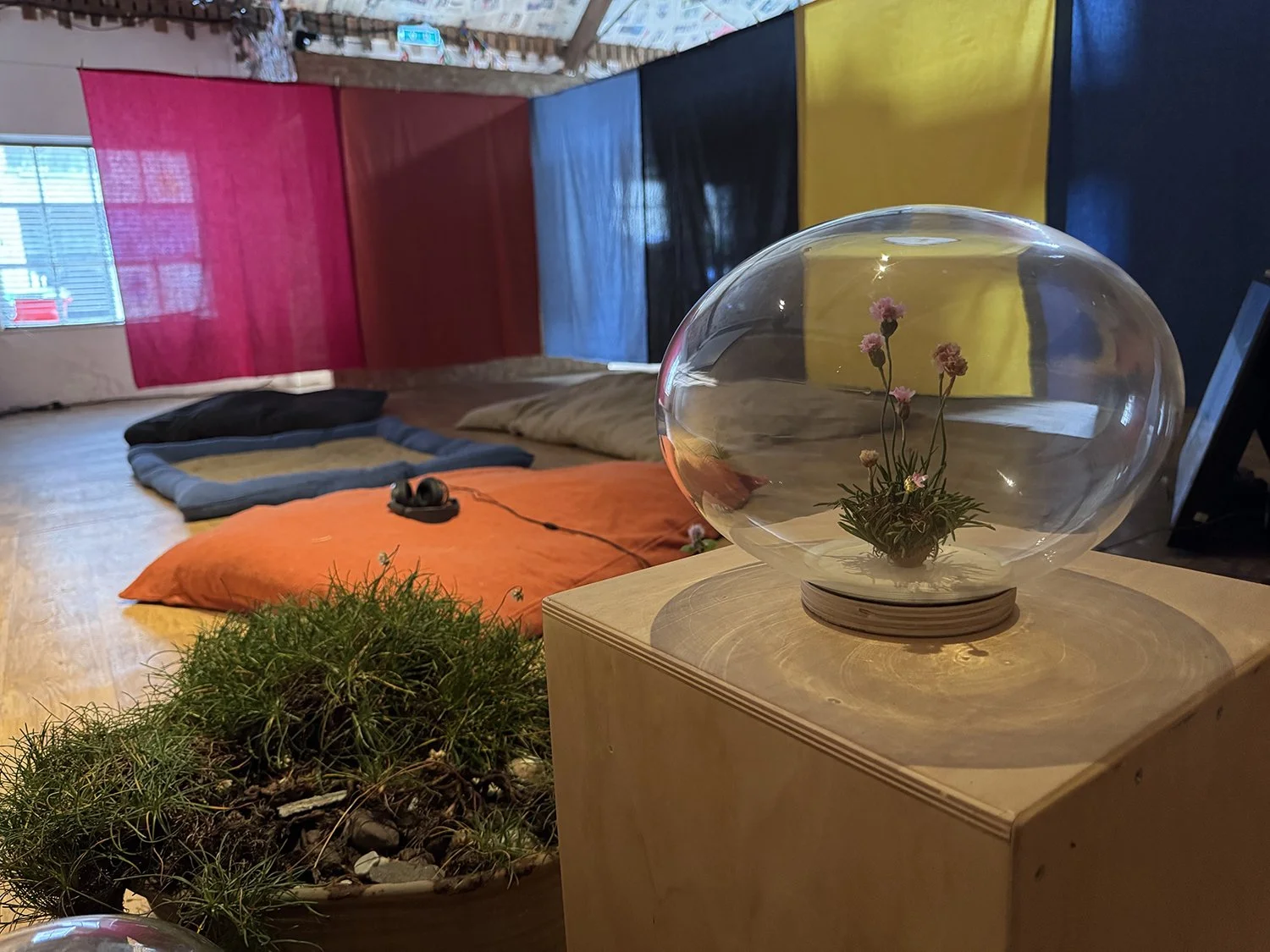
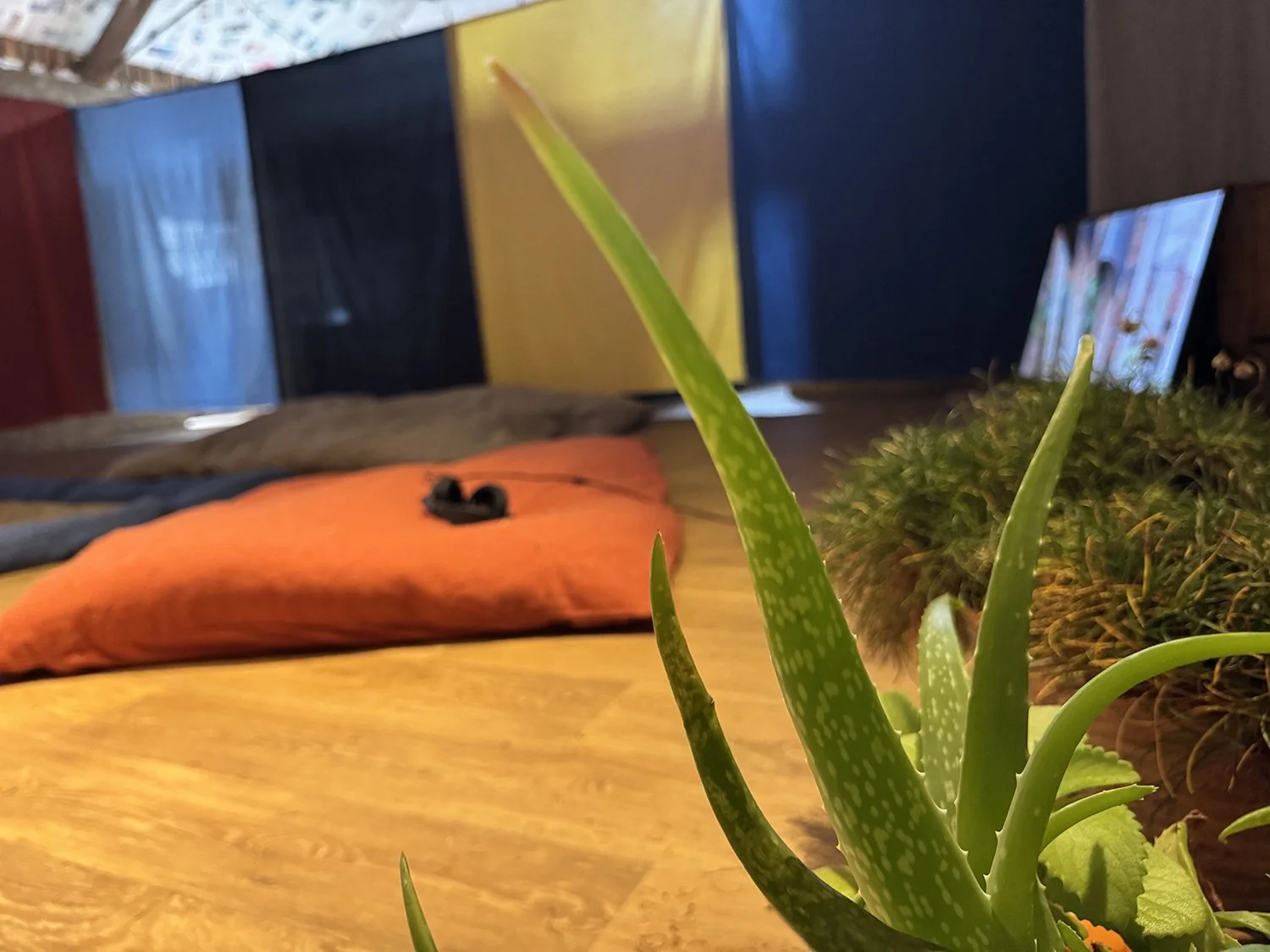
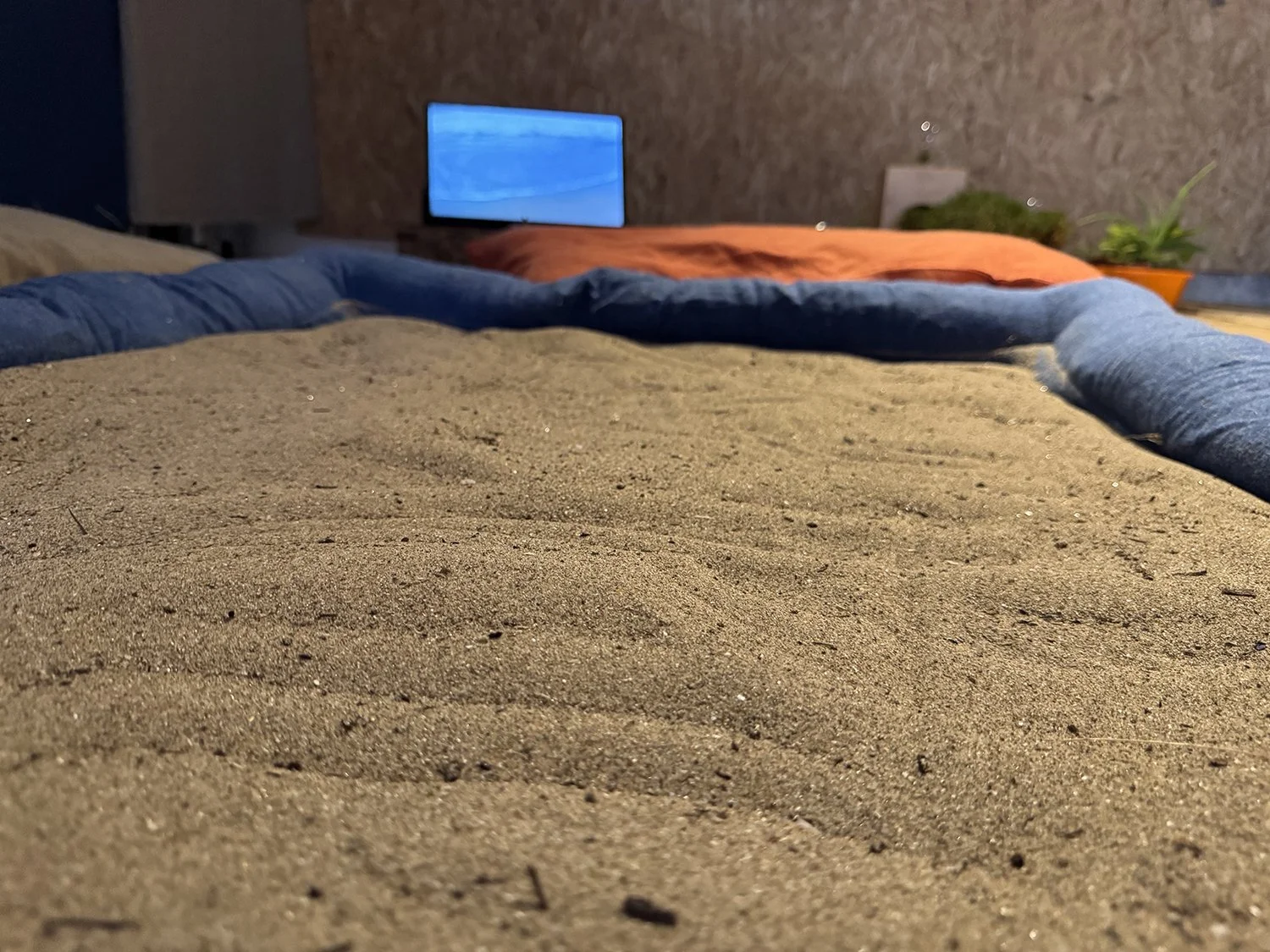
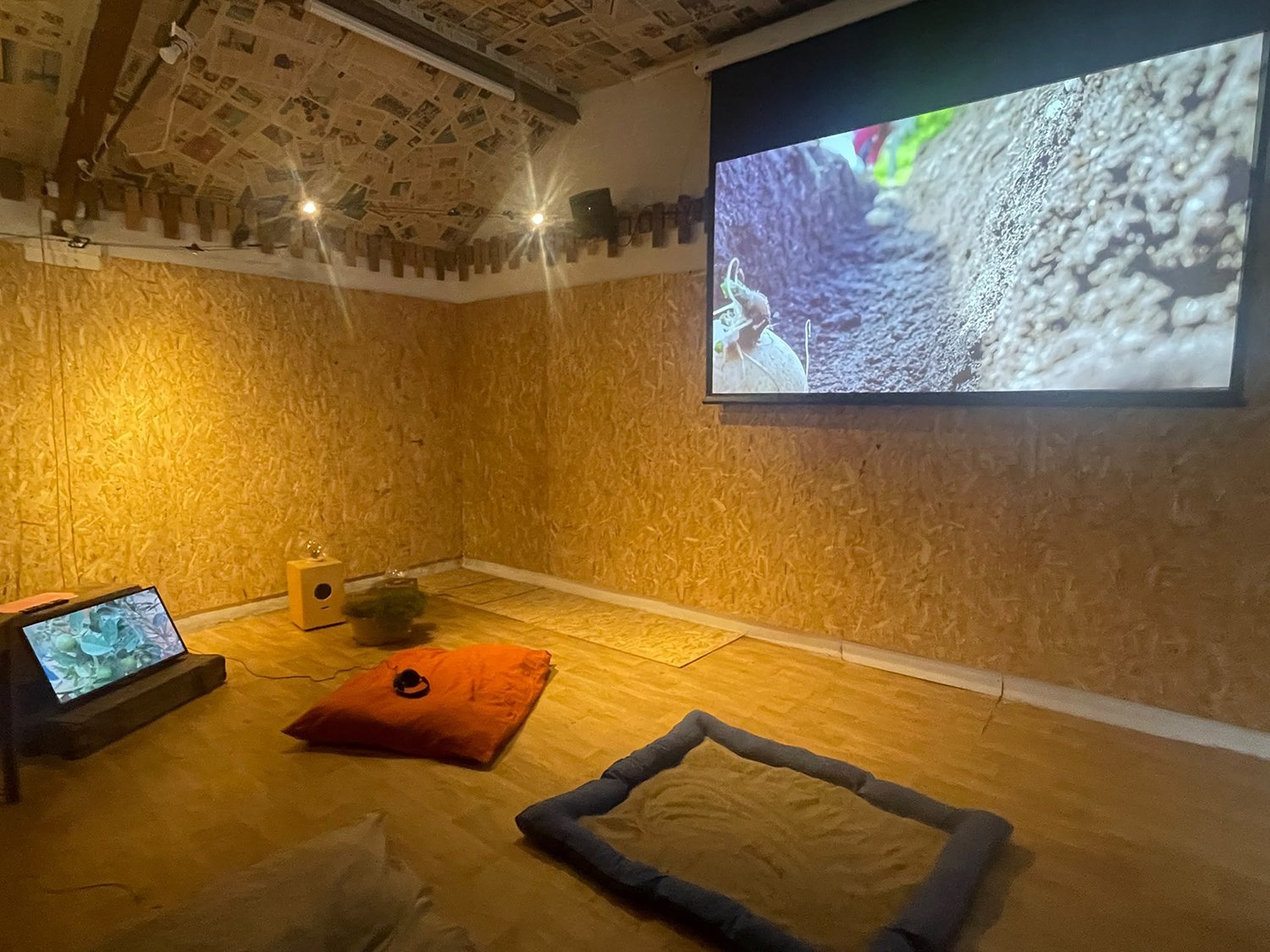
cielo, 2026, 2 channel video installation, audio, Welsh flannel, hay, sand, wax plant models, living plants, at Oriel Sploj, Machynlleth.
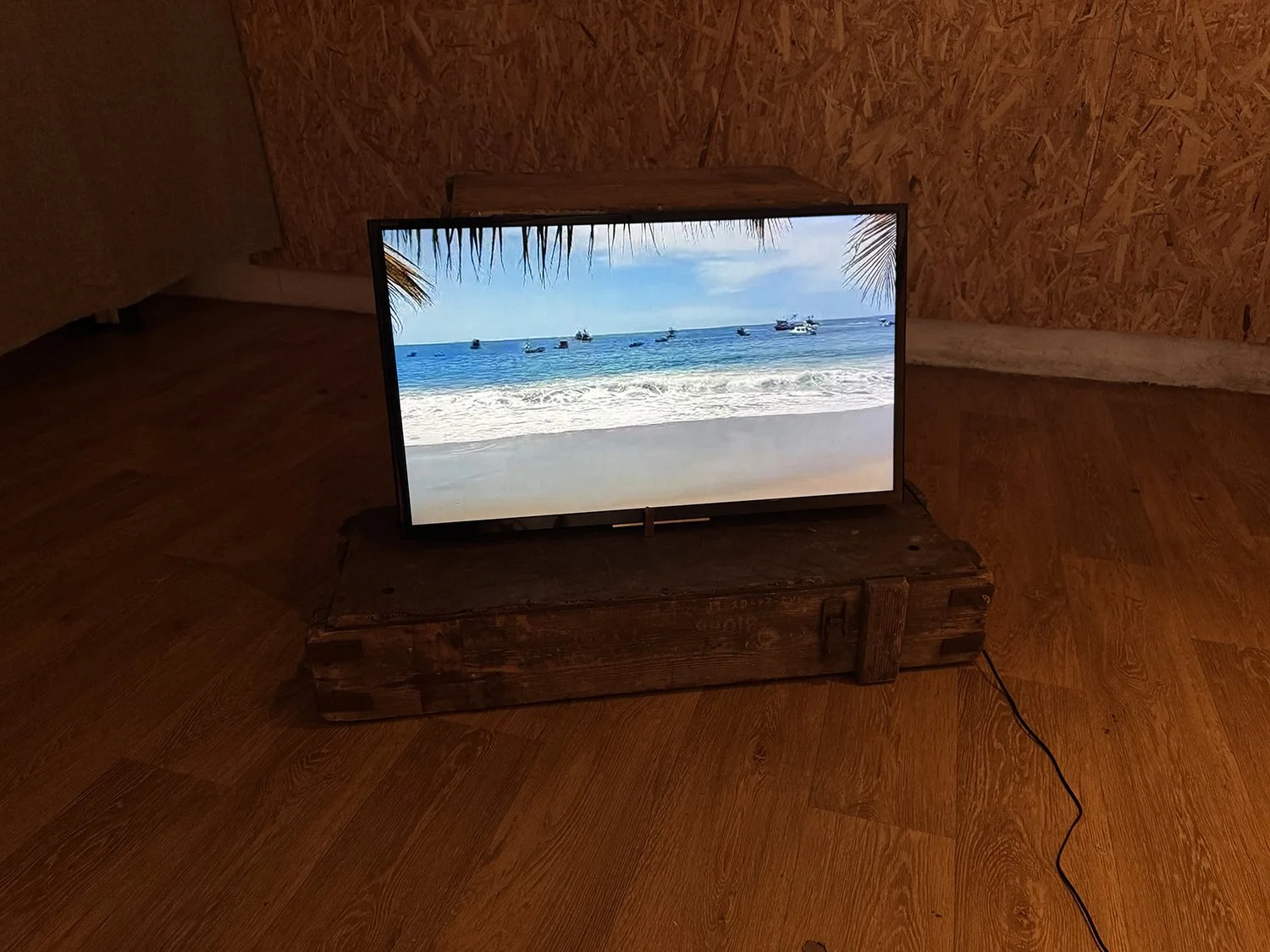
A film of Ynys Enlli (Bardsey Island) in Wales plays alongside film footage from Salango, a community in coastal Ecuador. Cielo tries to make planetary connection between these places (largely through rhythm) despite the distance separating them. Click here for videos.
The origins of this work have a long gestation. It might have been the experience (familiar to many) of growing up in a Welsh speaking family but not inheriting the language. The flow of Cymraeg broken by English in me. Only able to watch, feel and listen. I wonder if that’s why I became obsessed with rhythm and ecological edges between things. It might have been the experience of camping as a child in a remote cove in northwest Scotland. There were pink thrift flowers and a ruined water mill, which I found uncanny. This was the area our mother’s Welsh-speaking (but formerly Gaelic-speaking) tadcu had emigrated from in the wake of the Highland Clearances to work in the South Wales coalfield. Maybe the ruined mill led me to study archaeology. Thence to work as an archaeologist in the Peruvian Andes and in the Pacific coastal community of Salango in Ecuador. But I was always more interested in the everyday life of the communities, the communal spaces of shared labour, subsistence, dancing, interacting, confronting difference, finding consensus, and rhythms.
These experiences coalesced into my long-term project, trofannolismo, when I became artist-in-residence on Ynys Enlli in the far northwest of Wales. Mostly depopulated by the 1970s, the island is owned by a trust, supported by an economy of tourism and conservation management. Like others, I enjoy the peace and solitude, but I’m haunted by islanders’ stories of the formerly self-sustaining life of the community. Some feel the island is being turned into a museum while tourists’ food is ferried across the Sound. Young people don’t want to take up practical livelihoods like fishing, they say. I send film footage from Enlli to a friend, Patricia Allan, and ask her to send me videos of Salango in return. In one video, a long line of men and boys stand holding a fishing boat’s rope. The difference feels profound.
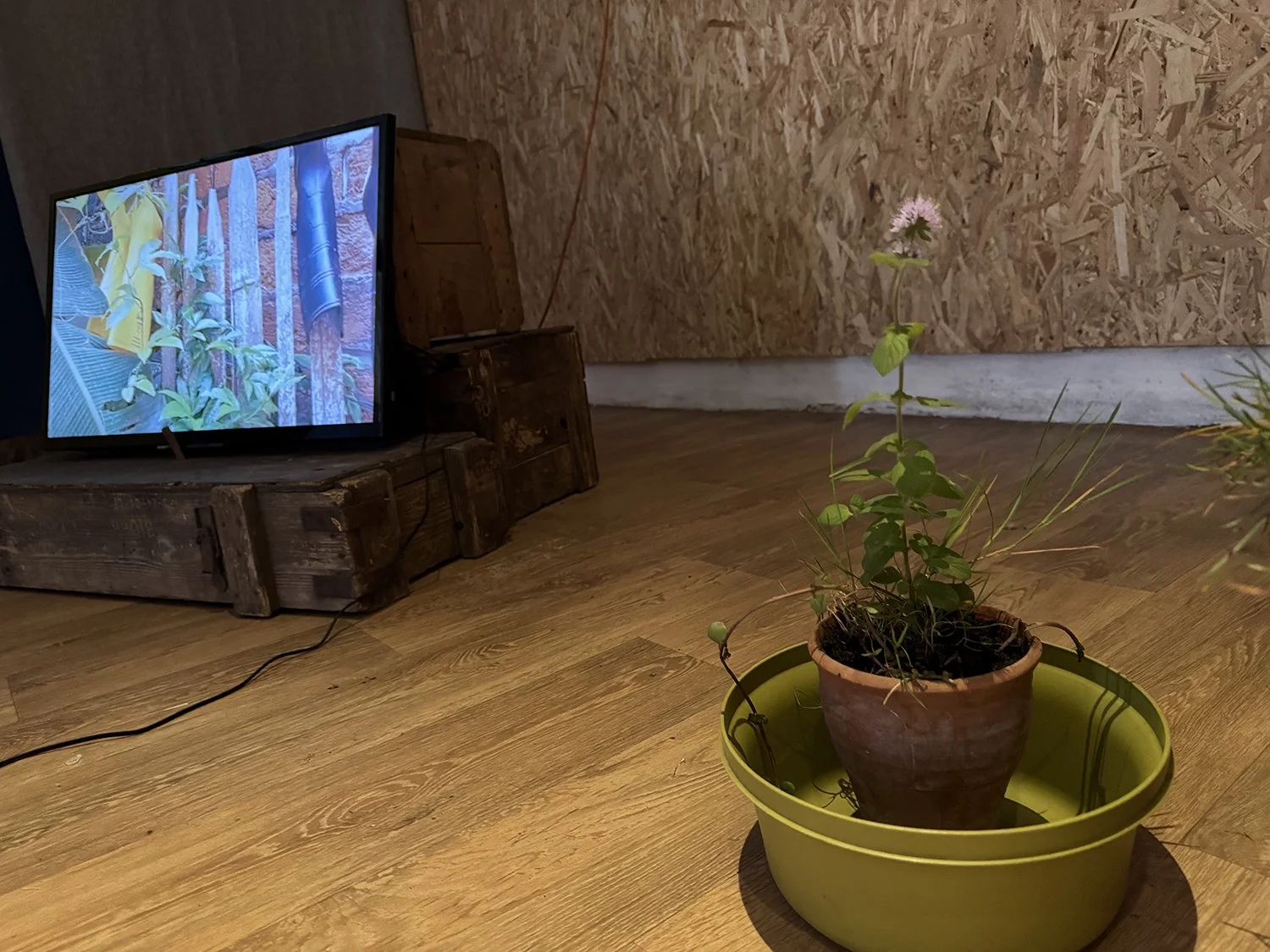
In the exhibition, the Enlli and Salango films loop beside each other as if they are living things, interacting. The films cycle at different speeds, creating new juxtapositions, breaks and synchronicities: like polyrhythmia. The West African Ewe drummer, C.K. Ladzekpo, says that: polyrhythm is the way that the Ewes try to make sense out of a very complex world that has very fast-changing moods, emotions, dynamics, events and so forth (YouTube, 2012). He compares the main rhythm to things going just fine whereas the cross-rhythm recreates life’s unexpected or stressful occurrences. From childhood on, polyrhythm exercises the Ewes’ ability to manage this dynamic tension. My film’s soundtrack is the rhythmic call-and-response of a pair of Manx shearwaters I recorded reuniting in their burrow after migrating back to Enlli from the coast of South America. Sounds from Salango drift in: Pacific breakers hitting the playa, underwater calls of ballenas (whales), and cumbia in back yards. Playing on headphones is Triste y Solitario by the Ecuadorian tecnocumbia singer, Widinson. Honouring cumbia’s polyrhythmic roots in his band’s name, Áfrika Mía!, he laments a disconnected solitary life: Cielo, por qué me castigas? (Heaven, why are you punishing me?)
Enlli and Salango are not the same. But, in planetary terms, neither are they separate. They face common issues (including climate change, tourism, a decline in local food production) but also different difficulties, such as violent narcotrafficking on the Ecuadorian coast. My inspiration for trofannolismo was the art installation, Tropicália (1967) by the Brazilian artist, Hélio Oiticica. Part tropical cliche and part interactive environment to hang out in, Oiticica likened Tropicália to a chácara (back yard). My installation contains footage of plots tended by people on Enlli and in Salango. It also contains sand and plants from both places.
trofannolismo = ‘tropical’ (Cymraeg/Welsh) + ‘ism’ (Spanish/Portuguese)
cielo = ‘sky’, ‘heaven’, ‘darling’ (Spanish)
Áfrika Mía = ‘My Africa’ (Spanish)